
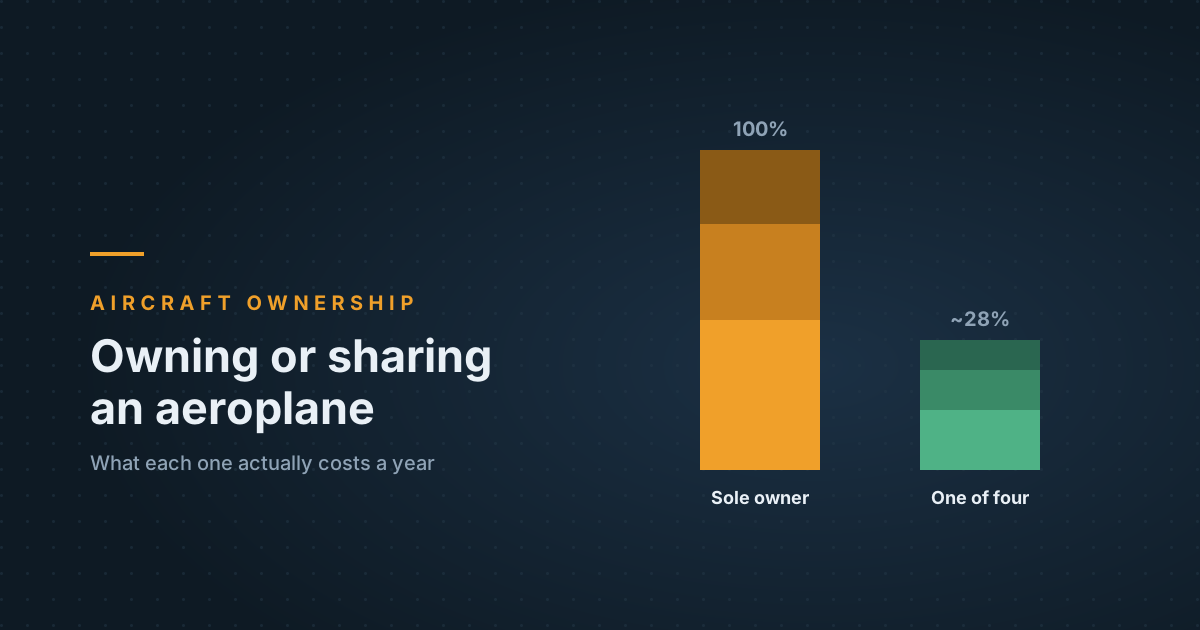
Owning or sharing an aeroplane: what each one actually costs
Fixed costs arrive whether you fly or not. Once you see which costs are fixed and which are hourly, the case for sharing makes itself.
Ask a pilot what an aeroplane costs and you will hear an hourly rate. It is the wrong number, and it is why first time owners get a shock in the second year.
Two kinds of cost
Fixed costs arrive whether the aircraft moves or not. Hangarage or parking, insurance, the annual inspection, the ARC, and any fixed maintenance. A hangared four seat single in western Europe carries several thousand euro a year before anyone opens the door.
Hourly costs only occur when you fly. Fuel, oil, and the money you should be setting aside towards the engine overhaul.
That second point is the one people skip. An engine with a 2,000 hour TBO and a €30,000 overhaul is costing you €15 an hour whether you put that money aside or not. Pilots who do not budget for it are not saving money, they are deferring a bill.
Where the difference shows
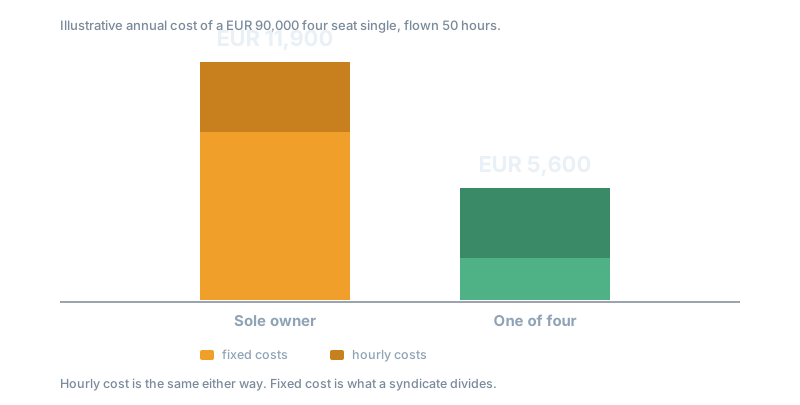
The hourly cost of flying is nearly identical whether you own the aircraft alone or hold a quarter of it. Fuel costs what fuel costs.
The fixed cost is what changes. Split four ways, a hangar bill and an insurance premium that would dominate a sole owner's budget become an irritation rather than a constraint.
For someone flying fifty hours a year, that is roughly the difference between an expensive hobby and an unaffordable one.
| Sole owner | One of four | |
|---|---|---|
| Fixed costs per year | Entirely yours | About a quarter |
| Hourly costs | The same | The same |
| Availability | Total | Very good below six members |
| Decisions | Yours alone | Agreed, sometimes slowly |
| Exit | Sell the aircraft | Sell a share, if someone wants it |
The crossover
Because fixed costs are spread across whatever hours you fly, the more you fly the less the argument matters.
At two hundred hours a year, a sole owner's fixed costs amortise to a modest figure per hour and the flexibility of owning outright starts to be worth paying for. At fifty hours, the same fixed costs are enormous per hour, and sharing is simply the better deal.
Most private pilots in Europe fly between twenty and sixty hours a year. Weather, work and daylight see to that. The honest question is not what you would fly if everything went well, but what you actually flew last year.
Sole ownership is a lifestyle decision that happens to cost money. Sharing is a financial decision that happens to cost some availability.
What sharing really costs you
Not much availability, in a group of four. Rather more autonomy.
You will not decide alone to fit a new radio. You will occasionally want the aircraft on a day someone else booked it. You will have a conversation about whether a €4,000 repair is worth doing on a €90,000 aeroplane, and it will take longer than deciding by yourself.
For most people, that is a fair trade. For some, it genuinely is not, and they should own outright and accept the cost.
Before you commit either way
Work out your own numbers rather than borrowing someone else's. Get an actual hangarage quote at your actual field, an actual insurance quote for your actual hours, and the maintenance history of the specific aircraft.
Then divide by the hours you flew last year, not the hours you intend to fly.
The result is usually sobering, and it is the number that decides whether you are buying an aeroplane or a share of one.
Frequently asked questions
- Is it cheaper to own or to share an aircraft?
- Sharing, almost always, and by more than people expect. Hourly costs such as fuel are the same either way. What a syndicate splits is the fixed cost, which is the larger number for anyone flying fewer than about a hundred hours a year.
- At how many hours does sole ownership make sense?
- Fixed costs are spread over the hours you fly, so the more you fly the less the difference matters. Somewhere above a hundred hours a year, sole ownership starts to look reasonable. Below fifty it rarely does on cost alone.
- What do people forget to budget for?
- The engine. Setting aside an hourly amount towards overhaul is the difference between a planned expense and a five figure surprise, and it is the item most often left out of a first budget.