
Revalidating your SEP rating: twelve hours, and which twelve months
The hours are easy to fly and easy to fly at the wrong time. What EASA requires to revalidate a single engine piston rating, and the trap in the timing.
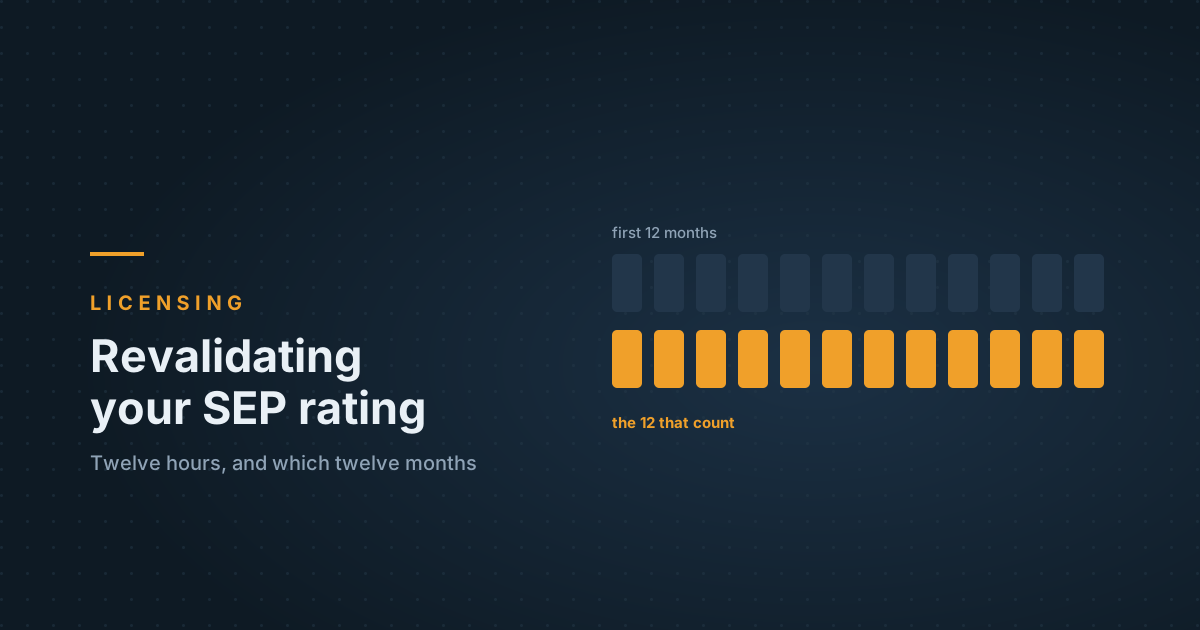
A single engine piston rating is valid for two years. Most pilots know that. Fewer know that only the second of those two years counts.
It is the most common licensing mistake in European general aviation, and it is entirely avoidable.
The experience route
To revalidate by experience, the rules require all of the following, flown within the twelve months immediately preceding expiry:
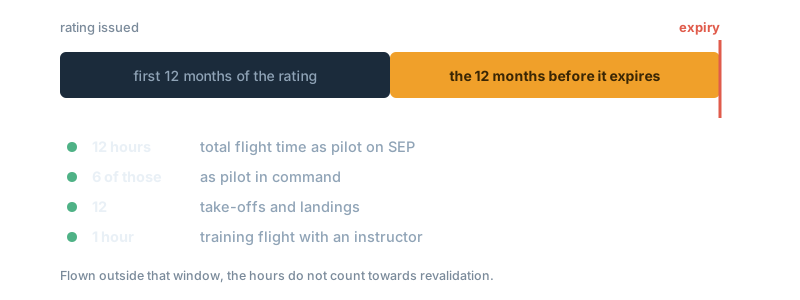
Twelve hours of flight time in the class. Six of those as pilot in command. Twelve take-offs and landings. And a training flight of at least one hour with a flight instructor or class rating instructor.
That training flight is not a test. It is an hour of instruction, signed off in your logbook. Many pilots use it for something they rarely practise, which is a better use of the hour than flying a circuit you are already comfortable with.
Why the window catches people
Picture a pilot who gets the rating in March, flies enthusiastically through that summer, accumulates thirty hours, and then has a quiet second year because of work or weather.
Come the following March, the rating is expiring and the logbook shows four hours in the relevant window. The thirty hours from the first summer count for nothing here.
The requirement is not twelve hours. It is twelve hours in the right twelve months.
The remedy, if you catch it in time, is simply to fly. Eight hours in a few weeks is achievable in most clubs, weather permitting. Caught in the last fortnight of winter, it often is not.
The proficiency check route
The alternative is a proficiency check with an examiner, which may be taken within the three months preceding expiry. Pass it and the rating revalidates regardless of how much you flew.
It costs more and needs arranging, but it has one clear advantage. If you fly irregularly, a check flight every two years is a more honest measure of whether you are safe than a tally of hours accumulated in benign conditions.
Some pilots choose it deliberately for that reason rather than because they ran out of time.
If it lapses
A rating that expires has not vanished, but the easy route has.
Revalidation by experience is no longer available once the expiry date passes. A proficiency check is required, and depending how long the rating has been lapsed, refresher training at an approved organisation may be required before the check.
None of this is catastrophic. It is expensive, it takes weeks rather than days to arrange, and it always seems to happen in the month you wanted to fly somewhere.
Track it, do not remember it
The failure here is never a pilot deciding not to bother. It is a pilot who genuinely believed they had more time, or more hours, than the window allowed.
Two numbers prevent it: the date twelve months before your rating expires, and your hours flown since that date. Neither is difficult to know, and both are invisible in a paper logbook unless you go looking.
A club that tracks flights properly can answer both for every member without anyone asking. SkyField records every flight against the pilot and the aircraft, so the question "how many hours have I flown since last March" has an answer that does not depend on adding up a logbook the week before a rating runs out.
The rating is your responsibility, not the club's. But there is no reason for the information to be hard to find.
Frequently asked questions
- What does revalidating a SEP rating require?
- Within the twelve months before the rating expires: twelve hours of flight time in the class, including six hours as pilot in command, twelve take-offs and landings, and a training flight of at least one hour with an instructor. A proficiency check is the alternative route.
- Do hours flown early in the two year period count?
- No, and this is where pilots come unstuck. Only flying inside the twelve months immediately before expiry counts towards the experience route. A busy first year followed by a quiet second year leaves you short.
- What if I miss the deadline?
- The rating lapses and revalidation by experience is no longer available. You then need a proficiency check with an examiner, and depending how long has passed, refresher training first. It is more expensive and takes longer to arrange.