
Tacho, Hobbs and logbook: the three different hours in one flight
One flight produces three different numbers. Here is what each meter counts, why your invoice and your logbook disagree, and what it costs you over a season.
A pilot shuts down after a local flight, writes 1.4 in the logbook, and gets an invoice for 1.5. The maintenance sheet on the clubhouse wall says the aircraft flew 1.25 that afternoon.
Nobody has made a mistake. Three instruments measured the same flight and produced three answers, because they are counting three different things.
What the Hobbs meter counts
The Hobbs is an elapsed-time clock. In most club aeroplanes it is wired to an oil pressure switch, so it starts turning a few seconds after the engine catches and stops when the engine does. Some installations run off the master switch or an airspeed switch instead, which changes the numbers, so it is worth knowing which one your aircraft has.
While it runs, it runs at real time. An hour on the Hobbs is sixty minutes, whether you spent them at 2400 RPM over the coast or sitting at the hold with the engine idling.
That last part is why the Hobbs and your wallet have a complicated relationship. Twenty minutes waiting for a departure slot at a busy airfield costs exactly the same as twenty minutes of cross-country.
What the tachometer counts
The tacho hour meter is geared to engine speed. It is calibrated so that one recorded hour equals one real hour at a particular RPM, usually somewhere around cruise. Below that RPM it turns more slowly. Above it, faster.
Taxi at 1000 RPM for ten minutes and the tacho might record four or five minutes. Idle on the ground for half an hour and it records perhaps twelve.
The logic is that an engine turning slowly is doing less work and wearing less, so the tacho is a rough proxy for engine life rather than for time. It is not a precise one. But it is closer to what a mechanic cares about than a clock is.
What your logbook counts
Neither of them, as it happens.
Under EASA rules, flight time for an aeroplane runs from the moment the aircraft first moves under its own power for the purpose of taking off, until it finally comes to rest at the end of the flight. Block time, in other words. Chocks to chocks.
Your engine is already running before the aircraft moves, and it keeps running after you park. So your logbook figure normally sits just below the Hobbs and comfortably above the tacho.
One flight, three numbers
Take a typical Saturday in a Cessna 172.
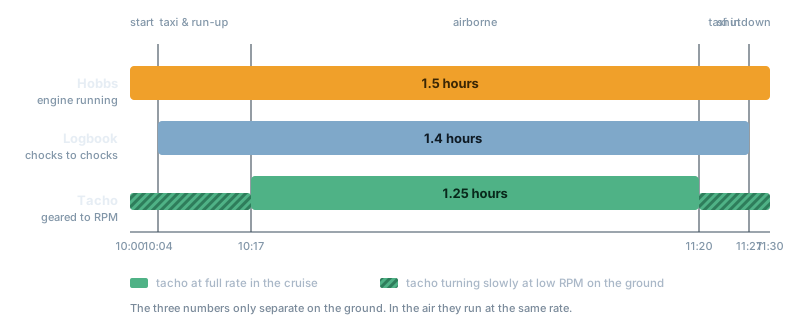
| Meter | Reading | What it counted |
|---|---|---|
| Hobbs | 1.5 | Engine start 10:00 to shutdown 11:30 |
| Logbook | 1.4 | Off blocks 10:04 to on blocks 11:27 |
| Tacho | 1.25 | Full rate airborne, roughly half rate on the ground |
At €150 an hour wet, billing that flight on the Hobbs costs €225. On the tacho it costs €187.50.
One flight, €37.50. Fly fifty hours in a season and the choice of meter is worth somewhere near €1,300.
Each number has a job
Why clubs choose differently
Clubs at busy airfields tend to bill on the Hobbs, and they have a fair argument. If an aircraft sits at the hold for twenty minutes, that aircraft is unavailable to everybody else, and the fuel burn is real. Charging for it reflects what the flight actually cost the club.
Clubs at quiet strips more often bill on the tacho. Ground time there is short, the difference is small, and members feel they are paying for flying rather than for waiting.
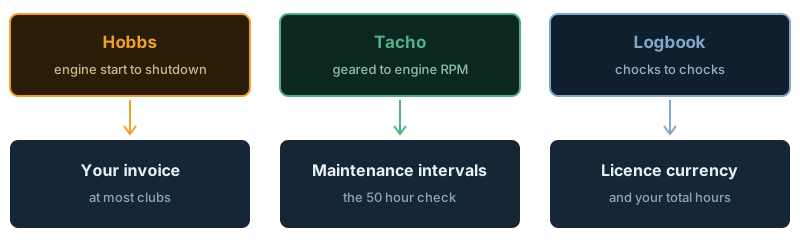
Both are defensible. What causes arguments is when nobody has said which one is in use, or when the club bills on one meter and tracks maintenance on the other without telling anyone. A member who assumes the 50-hour check counts the same hours as the invoice will eventually be surprised, usually at the least convenient moment.
What to ask your club
Four questions, and any club treasurer should be able to answer all of them without checking.
- Which meter is my invoice calculated from?
- Which meter do the maintenance intervals run on?
- Is the rate wet or dry, and where is the fuel price set?
- What happens if the meter fails mid-flight?
That last one catches people out. Meters do fail, and a club without an agreed answer ends up negotiating a price after the flight, which suits nobody.
Recording both
Most clubs write one number in the tech log and hope it is the right one.
Aircraft increasingly carry both meters, and modern engine monitors log rather more than that. There is no good reason to throw the second number away. Record both after every flight and you can bill on one basis, run maintenance on the other, and settle any disagreement by looking rather than remembering.
In SkyField, each aircraft is configured separately: choose which meters exist, which of them is primary, and whether a pilot must enter a start and end reading or a single cumulative figure. The primary meter drives the hours flown and the maintenance countdown. Everything else is recorded alongside it and stays there.
A syndicate with one tacho-equipped Piper and a school with a fleet of glass-panel trainers are counting different things. The software should not force them to pretend otherwise.
Frequently asked questions
- Why is my invoice higher than the hours in my logbook?
- Most clubs bill on the Hobbs meter, which starts at engine start and stops at shutdown. Your logbook records flight time, which under EASA rules runs from when the aircraft first moves until it finally comes to rest. Engine start happens before the aircraft moves, so the Hobbs figure is normally the larger of the two.
- Is tacho or Hobbs better for a flying club?
- Neither is correct in the abstract. Hobbs charges for every minute the engine runs, which is fairer at busy airfields where taxi and holding time is real cost. Tacho charges closer to engine wear, which pilots prefer but which can leave a club short if aircraft spend a long time on the ground. What matters is that the club picks one, says so plainly, and uses the same basis consistently.
- Which meter should drive maintenance intervals?
- Clubs commonly track engine intervals on the tachometer, because it approximates engine wear more closely than elapsed time. Airframe and calendar items are tracked separately. Whichever you choose, record it against the aircraft so nobody has to guess which number the 50-hour check counts.